
How to Choose the Best Countertop Material for Your Home: Granite vs. Quartz vs. Marble vs. Quartzite
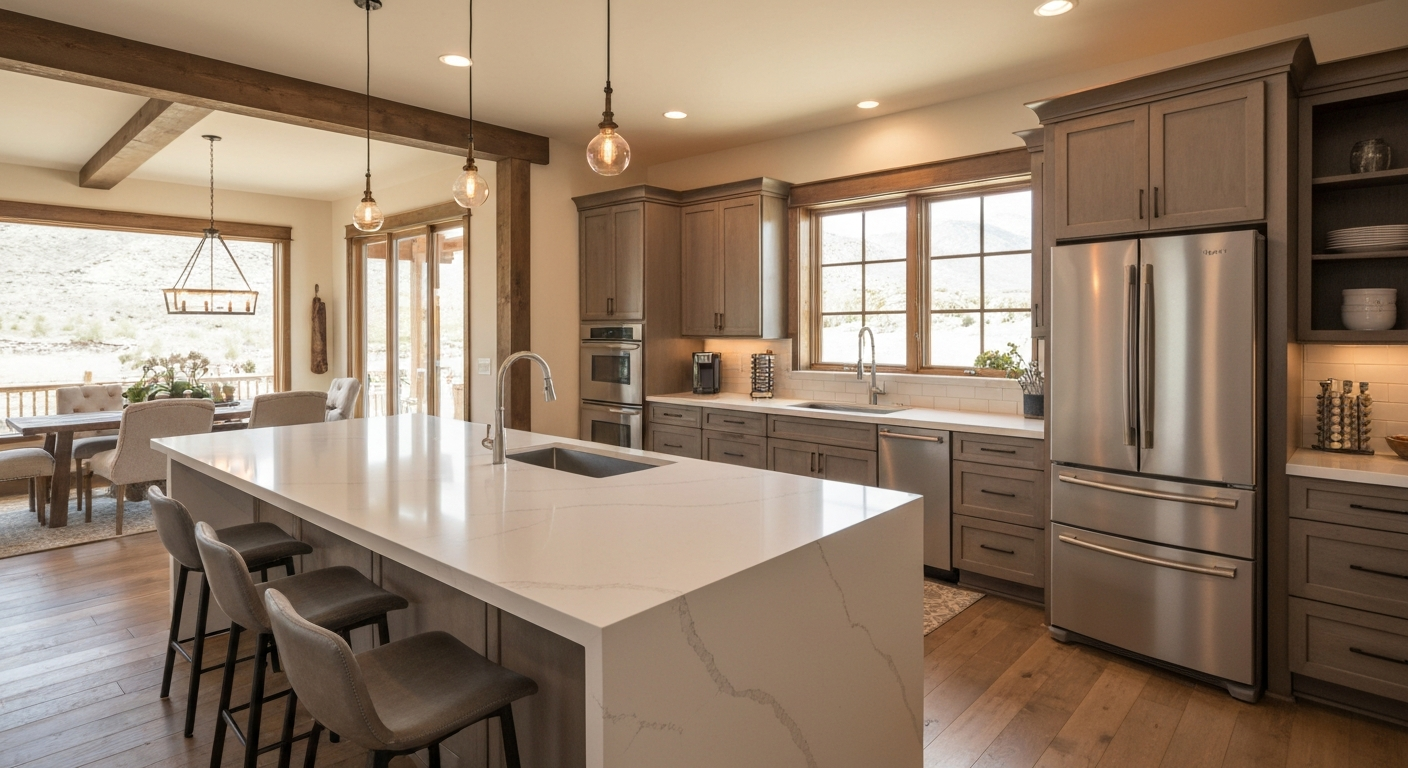
The countertop is one of the hardest-working surfaces in your home. You prep meals on it, set hot pans on it, wipe it down daily, and it's almost always the first thing guests notice when they walk into your kitchen. So when the time comes to replace it — whether as part of a full kitchen remodel or a targeted upgrade — the material you choose matters more than most people realize.
Granite, quartz, marble, and quartzite are the four most popular options on the market today. Each has real advantages, real trade-offs, and a specific type of household where it thrives. Choosing based on how something looks in a showroom without understanding how it performs in real life is one of the most common — and costly — mistakes homeowners make.
This guide is designed to change that. By the time you finish reading, you'll know exactly which material fits your kitchen, your lifestyle, and your long-term goals.
Why Your Countertop Material Matters More Than You Think
A countertop isn't just an aesthetic decision — it's a functional one. The wrong material in the wrong kitchen can mean:
- Permanent stains from a single glass of red wine
- Cracks from a heavy cast-iron pan set down too quickly
- A surface that looks beautiful but requires resealing every few months
- Thousands of dollars in premature replacement costs
On the flip side, the right countertop — properly chosen and professionally installed — can last decades, increase your home's resale value, and genuinely transform how your kitchen feels to use every single day.
If you're planning a kitchen remodel, your countertop decision will influence cabinet selections, backsplash choices, lighting design, and even flooring. It's not the place to improvise.
The Four Materials: What You're Actually Choosing Between
Granite Countertops
Granite is a natural igneous stone — formed deep in the earth under extreme heat and pressure over millions of years. No two slabs are identical, which is part of what makes it so appealing to homeowners who want something genuinely unique.
What makes granite stand out:
- Each slab has its own natural pattern — you're not getting a manufactured look
- Extremely durable when properly sealed
- Heat resistant — you can place pots directly on it (though it's still not recommended as a habit)
- Available in an enormous range of colors, from classic blacks and whites to dramatic blues and greens
- Adds perceived luxury to any kitchen
What to know before you choose:
- Granite is porous and requires sealing once a year to protect against stains and bacteria
- Highly acidic substances — lemon juice, vinegar, wine — can etch unsealed granite over time
- Because it's a natural material, color and pattern consistency across slabs can vary, which matters if you're wrapping an island or doing an L-shaped kitchen
- Heavier than engineered surfaces, so cabinet support must be adequate
Best for: Homeowners who prioritize natural beauty and uniqueness, are willing to do basic annual maintenance, and want a timeless kitchen aesthetic that never goes out of style.
Quartz Countertops
Quartz countertops are engineered — made from approximately 90–95% ground quartz crystals bound with polymer resins and pigments. This manufacturing process gives designers precise control over color and pattern, which is why quartz has become the most popular countertop material in the United States.
What makes quartz stand out:
- Non-porous surface — no sealing required, ever
- Highly resistant to stains, bacteria, and moisture
- Extremely consistent in color and pattern — ideal for large kitchens and custom layouts
- Scratch-resistant and impact-resistant
- Available in a wide range of styles, including designs that convincingly mimic marble, granite, and concrete
What to know before you choose:
- Not as heat resistant as natural stone — sustained direct heat can damage the resin binders, so always use trivets
- In Utah's strong sunlight, UV exposure over time can cause slight discoloration in certain quartz colors near windows
- The engineered appearance, while excellent, is sometimes distinguishable from natural stone on close inspection
Best for: Busy families, households with young children, homeowners who want low maintenance without sacrificing aesthetics, and anyone who does a lot of cooking and wants a surface that can keep up.
Marble Countertops
Few materials carry the aspirational weight of marble. It's been used in architecture and design for thousands of years, and a marble kitchen still communicates a level of refinement that's difficult to replicate.
What makes marble stand out:
- Timeless, classical elegance that photographs beautifully
- Naturally cool surface — favored by serious bakers for working with pastry and dough
- Each slab is unique, with distinctive veining that no engineered material can fully reproduce
- Adds significant perceived value in luxury home markets
What to know before you choose:
- Marble is porous and relatively soft compared to granite or quartzite — it etches, stains, and scratches more easily
- Acidic substances will dull the surface almost immediately on unsealed marble — citrus, wine, tomato sauce, coffee
- Requires regular sealing and more careful daily maintenance than any other material on this list
- In Utah's dry climate, marble performs reasonably well, but the maintenance commitment is real
- White marble — Carrara, Calacatta — shows wear more visibly over time
Best for: Design-focused homeowners who understand the maintenance commitment and treat their kitchen more as a showpiece. Also ideal for kitchen islands or specific sections where wear is limited, rather than as the primary working surface in a high-traffic kitchen.
Quartzite Countertops
Quartzite is frequently confused with quartz — and they couldn't be more different. Quartzite is a natural stone formed when sandstone is subjected to extreme heat and pressure, transforming it into one of the hardest natural stones available. It's not engineered; it comes from the earth like granite and marble.
What makes quartzite stand out:
- The visual aesthetic of marble — dramatic veining, soft white and grey tones — with significantly higher durability
- Harder than granite and far harder than marble
- Heat resistant — more so than quartz
- Lower porosity than marble, making it more resistant to staining
- Growing in popularity in Utah's high-end renovation market, particularly in Draper and Park City
What to know before you choose:
- Still requires sealing, though less frequently than marble
- Premium pricing — quartzite typically costs more than standard granite or quartz
- Because it's rarer and harder to fabricate, finding skilled installers is important
- Some stones marketed as quartzite are actually soft marble — always verify with a scratch test or request documentation from your fabricator
Best for: Homeowners who love the marble aesthetic but want a more practical, durable surface for everyday use. An ideal choice for anyone who wants natural stone with lower long-term stress.
Side-by-Side Comparison: The Numbers That Matter
| Feature | Granite | Quartz | Marble | Quartzite |
|---|---|---|---|---|
| Type | Natural stone | Engineered | Natural stone | Natural stone |
| Durability | ★★★★☆ | ★★★★★ | ★★★☆☆ | ★★★★★ |
| Stain Resistance | ★★★☆☆ | ★★★★★ | ★★☆☆☆ | ★★★☆☆ |
| Heat Resistance | ★★★★★ | ★★★☆☆ | ★★★★☆ | ★★★★★ |
| Scratch Resistance | ★★★★☆ | ★★★★★ | ★★☆☆☆ | ★★★★★ |
| Maintenance | Annual sealing | None | Frequent sealing | Occasional sealing |
| Consistency | Variable | Consistent | Variable | Variable |
| Price Range (installed) | $55–$100/sq ft | $65–$120/sq ft | $75–$150/sq ft | $80–$150/sq ft |
| Lifespan (with care) | 25–50+ years | 15–25 years | 20–30+ years | 25–50+ years |
| UV Resistance | Excellent | Moderate | Excellent | Excellent |
| Best Environment | Any kitchen | Busy families | Low-traffic, design focus | Any kitchen |
*Price ranges are estimates for the Utah/Wasatch Front market as of 2026. Final pricing depends on slab grade, edge profile, cutouts, and installation complexity. Request a personalized estimate for your specific project.
How to Choose Based on Your Lifestyle
The most common mistake homeowners make is choosing a countertop based on aesthetics alone. Material selection should start with an honest assessment of how you actually use your kitchen.
You have a busy household with young children
Best choice: Quartz.
Young children mean spills, juice boxes, marker caps left uncovered, and general chaos. Quartz's non-porous surface is forgiving, easy to clean, and doesn't require the annual maintenance ritual that natural stones demand. You'll clean up messes and move on.
You cook frequently and seriously
Best choice: Granite or quartzite.
If you're putting hot pans from the oven directly onto the counter — or you simply want the assurance that a moment of carelessness won't damage your surface — natural stone wins. Granite and quartzite handle heat far better than quartz. Just use a trivet as a good habit regardless.
You prioritize design above all else
Best choice: Marble or quartzite.
If your kitchen is going to be a design showpiece and you're committed to treating it as such, marble's unmatched elegance is worth the maintenance. For those who want the marble look without the vulnerability, quartzite delivers 90% of the aesthetic with significantly higher durability.
You're planning to sell your home in the next few years
Best choice: Quartz or granite.
Both are widely recognized by buyers as quality upgrades. Quartz appeals to practical buyers; granite appeals to traditionalists. Marble can be polarizing — some buyers love it, others worry about the maintenance.
Common Mistakes When Choosing a Countertop Material
Even informed homeowners make these errors:
- Choosing based on trends, not lifestyle. A material trending on Pinterest or HGTV may not fit how you actually cook, clean, and live.
- Ignoring maintenance requirements. If you won't realistically commit to annual sealing, don't choose marble.
- Selecting the material before confirming cabinet support. Natural stone is heavy. Older or lighter cabinets may require reinforcement.
- Not accounting for edge profiles in the budget. A waterfall edge or detailed ogee can add significant cost and needs to be factored in early.
- Choosing based on sample tiles, not full slabs. Granite and quartzite in particular look dramatically different at slab size versus a 4-inch sample. Always view the actual slab before committing.
- Overlooking backsplash coordination. The countertop drives the backsplash decision. Make this choice first.
If you're also updating kitchen cabinets, decide on your countertop material before finalizing cabinet colors. The countertop should lead the design direction, not follow it.
What Does Countertop Installation Cost in Utah?
Countertop pricing varies based on material grade, slab size, edge profile complexity, number of cutouts (sink, cooktop), and the experience of your installer. Here's a realistic framework for the Wasatch Front market:
| Material | Entry-Level | Mid-Range | Premium |
|---|---|---|---|
| Granite | $55–$70/sq ft | $70–$90/sq ft | $90–$130+/sq ft |
| Quartz | $65–$80/sq ft | $80–$100/sq ft | $100–$140+/sq ft |
| Marble | $75–$100/sq ft | $100–$125/sq ft | $125–$175+/sq ft |
| Quartzite | $80–$100/sq ft | $100–$130/sq ft | $130–$165+/sq ft |
*Prices include professional installation. A standard kitchen with approximately 45–55 square feet of countertop typically costs between $2,500 and $6,500 for mid-range materials.
The most significant variable isn't always the material itself — it's the quality of fabrication and installation. Poorly cut joints, improper seam placement, and inadequate support all affect both aesthetics and longevity. Our network of qualified countertop specialists in the Sandy, Draper, and South Jordan areas are experienced in precision fabrication that protects your investment.
Request a free, no-pressure estimate for your kitchen countertop project →
How Long Does Countertop Installation Take?
Once you've selected your material and confirmed your measurements, the timeline typically looks like this:
- Template measurement: 1 day (done after cabinets are installed)
- Fabrication: 7–14 business days
- Installation day: 4–8 hours for a standard kitchen
- Curing/setting: 24 hours before normal use; 48–72 hours before heavy use
The total time from material selection to completed installation is usually 2–3 weeks. For full kitchen remodeling projects, countertops are typically one of the last phases, installed after cabinets and before appliances.
Which Material Adds the Most Home Value?
According to Remodeling Magazine's annual Cost vs. Value report, kitchen remodels consistently rank among the highest-ROI home improvements — and countertops are a primary driver of that return.
In general:
- Quartz and granite are the most universally recognized upgrades by buyers and appraisers
- Marble and quartzite can command premium valuations in luxury markets (Park City, Holladay, Draper)
- Upgrading from builder-grade laminate to any natural or engineered stone creates an immediately noticeable quality jump that resonates with buyers
For most Utah homeowners on the Wasatch Front, a mid-range quartz or granite countertop represents the strongest combination of ROI, durability, and broad buyer appeal.
Frequently Asked Questions
How long do quartz countertops last?
With normal household use and basic care, professionally installed quartz countertops typically last 15–25 years. Natural stone options like granite and quartzite can last 25–50+ years when properly sealed and maintained. Lifespan depends heavily on installation quality, so choosing an experienced specialist matters.
Do granite countertops need to be sealed in Utah?
Yes. Because granite is porous, it requires sealing approximately once a year to prevent staining and moisture absorption. Utah's dry climate is actually relatively kind to natural stone compared to humid climates, but sealing is still necessary. A simple water test — drop water on the surface; if it absorbs rather than beads, it's time to reseal — tells you when the time has come.
Is quartz or granite better for resale value?
Both are strong value-adds that buyers recognize immediately. Quartz tends to appeal more to buyers who prioritize low maintenance; granite appeals to buyers who love natural stone. In most Utah markets, either is an upgrade that returns 60–80% of its cost in home value.
Can I put a hot pan directly on quartz countertops?
It's not recommended. The resin binders in quartz can be damaged by sustained direct heat, potentially causing discoloration or cracking. Always use trivets or hot pads. Granite and quartzite are more heat-tolerant, but using trivets remains a good habit regardless of material.
What is the difference between quartzite and quartz?
Despite similar names, they're completely different materials. Quartz is engineered — manufactured from crushed quartz crystals and resins. Quartzite is a natural stone — formed when sandstone is transformed by geological heat and pressure. Quartzite looks more like marble; quartz can be designed to look like almost anything. Quartzite requires sealing; quartz does not.
Is marble practical for a kitchen in Utah?
Marble can work beautifully in a Utah kitchen with the right approach and mindset. It's particularly well-suited for kitchen islands or prep areas where traffic is more controlled. For the primary countertop in a high-use kitchen, most Utah homeowners find quartzite a more practical alternative — it delivers a similar aesthetic with significantly higher durability. If you love marble's look, consider using it for an accent surface alongside a more durable primary material.
How much does countertop replacement cost in the Salt Lake City area?
For a standard kitchen in the Salt Lake City metro area, countertop replacement typically ranges from $2,000 to $7,000+ depending on material, square footage, edge profiles, and number of cutouts. Entry-level granite and quartz projects start around $2,500. Premium quartzite or marble installations in larger kitchens can exceed $8,000–$10,000. Requesting multiple estimates from qualified specialists is always the right approach.
Can countertops be installed without replacing cabinets?
Absolutely — and this is one of the most cost-effective kitchen upgrades available. If your cabinets are in good structural condition, replacing only the countertops can dramatically transform the look of your kitchen for a fraction of a full remodel cost. If your goal is maximum visual impact at a controlled budget, countertop replacement alone is worth serious consideration.
The Bottom Line: Which Countertop Material Is Right for You?
There isn't a single "best" countertop material. There's the material that fits your life.
- Choose quartz if you want low maintenance, consistency, and a durable everyday surface for a busy household.
- Choose granite if you want natural stone with unique character, timeless appeal, and are comfortable with annual sealing.
- Choose quartzite if you love the look of marble but want a surface that can handle real daily use — and you're willing to invest in premium natural stone.
- Choose marble if design is your primary priority, you understand the maintenance commitment, and you're treating your kitchen as a carefully curated space.
If you're still uncertain after reading this — that's completely normal. Countertop selection involves seeing real slabs, understanding your specific kitchen dimensions, and weighing factors that differ from one home to the next.
That's exactly what a free consultation is for.
About the Author
Marisa Batista Moreira
Managing Editor | Content Operations Manager at Alta Home Group
Marisa Batista Moreira leads the editorial operations at Alta Home Group, ensuring every article meets high standards of accuracy, clarity, and usefulness for homeowners. Her work focuses on content strategy, local SEO, knowledge management, editorial quality, and AI-assisted content workflows. She oversees the company's educational content to help homeowners make informed decisions about remodeling, renovations, and home improvement projects while maintaining editorial integrity and trusted information.
Ready to explore your options?
Our network of qualified countertop specialists serves homeowners across Sandy, Salt Lake City, Draper, South Jordan, West Jordan, and the greater Wasatch Front. We'll help you evaluate materials, see samples in your actual kitchen light, and get a clear, accurate estimate — with no pressure and no commitment required.
Whether you're planning a full kitchen remodeling project or simply upgrading your surfaces, we're here to make the process straightforward, honest, and worth your time.
Related Articles
View AllQuartz vs. Granite: Which is Best for Utah Kitchens?
An in-depth comparison of durability, maintenance, and aesthetics to help you choose the perfect countertop material for your home.
Best Countertop Materials for Busy Families
Choosing countertops for a family kitchen means balancing durability, maintenance, and budget. Here's what actually holds up in real Utah households.
