
Countertop Installation in Salt Lake City, Utah
Salt Lake City's diverse housing stock demands countertop expertise. From historic bungalows to downtown luxury condos, our qualified partner network installs quartz, granite, quartzite, and marble countertops with precision.
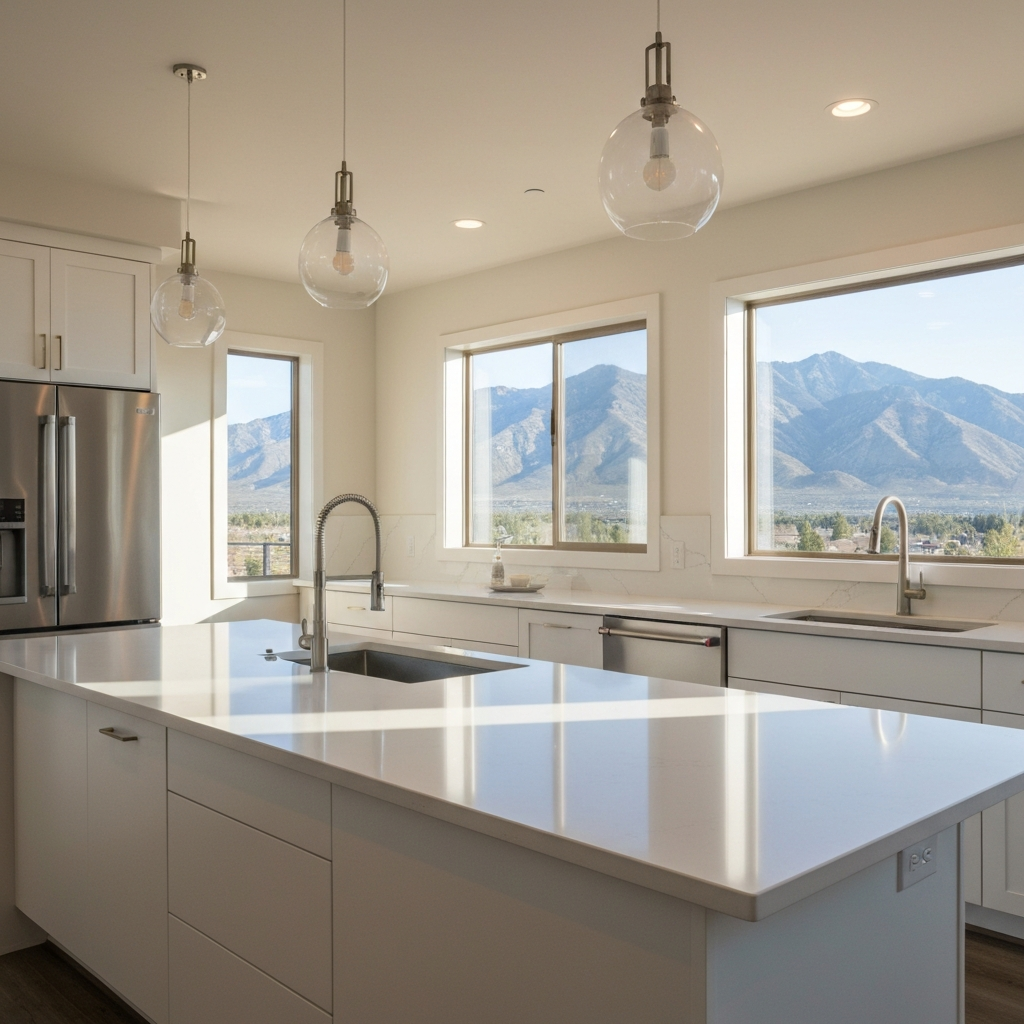
Salt Lake City's Housing Diversity Demands Countertop Expertise
Salt Lake City is Utah's most architecturally and demographically diverse urban market — and that diversity is reflected in its countertop renovation landscape more than anywhere else on the Wasatch Front.
A Capitol Hill Craftsman bungalow built in 1922 has a compact kitchen with period-appropriate proportions that reward material authenticity. A Sugar House mid-century ranch built in 1958 is currently mid-way through an open-concept renovation that is eliminating a load-bearing wall and creating space for a kitchen island that didn't exist in the original floor plan. A downtown luxury condominium built in 2019 came with premium quartz already installed — but the owner wants quartzite. A Marmalade District row house is being converted from a multi-unit rental into a single-family home, and the kitchen is starting from scratch.
Every one of these is a Salt Lake City countertop project. The range is broader in SLC than anywhere else in Utah — and the design sophistication of Salt Lake City buyers means that material knowledge, installation precision, and honest guidance matter more here than in any suburban market.
The Three SLC Countertop Market Segments
Historic Neighborhoods: The Avenues, Capitol Hill, Sugar House, Liberty Wells
Salt Lake City's historic residential neighborhoods — developed primarily between 1910 and 1960 — present a specific countertop challenge: compact kitchen footprints, character-defining architectural details, and homeowners who have invested in restoring or authentically renovating homes that deserve material choices consistent with that commitment.
In the Avenues and Capitol Hill's bungalows and Craftsman homes, countertop replacement is often part of a kitchen renovation that also addresses cabinetry, flooring, and layout. The kitchen footprint in a 1,400-square-foot 1925 bungalow may be 25-35 square feet of countertop surface — compact by suburban standards but carrying significant visual impact in a tight kitchen space.
Material choices in historic SLC neighborhoods skew toward quartz in warm white and cream tones that complement Craftsman cabinetry, natural granite in earthy or neutral tones that read as authentic in a period home, or — in premium renovations — quartzite or marble for bathrooms where the material's natural character reinforces the home's historic quality.
Mid-Century and Post-War Neighborhoods: Sugar House, Millcreek, East Bench
Sugar House and East Bench represent SLC's mid-century residential character: solid brick construction from the 1940s-1970s, larger lots than the Avenues, and kitchens that are currently undergoing the most significant renovation activity in the city. Open-concept kitchen conversions — removing walls to combine the kitchen with a dining room or living space — are extremely common in these neighborhoods, creating island opportunities and larger countertop footprints that transform what was a compact galley kitchen into a modern open-plan workspace.
In Sugar House, the countertop renovation often accompanies an open-plan conversion. The new island — frequently the first island this home has ever had — becomes the primary countertop design statement. Premium veined quartz and quartzite are the most common choices for Sugar House island installations.
Downtown Condos and Luxury Market: Downtown, 9th & 9th, City Creek Adjacent
Downtown Salt Lake City's luxury condominium market expects premium materials as a baseline — and many SLC condo owners are renovating to upgrade from developer-specified surfaces to their own preferred materials. The condo kitchen footprint varies from compact galley layouts in older downtown buildings to generous open-plan configurations in newer luxury towers. Quartzite and premium quartz dominate the downtown condo upgrade market, with marble regularly specified for primary bathrooms in high-end SLC residences.
Countertop Materials for Salt Lake City Homes
Quartz — The Design-Forward Standard
Quartz (engineered stone) is the dominant countertop material in SLC's renovation market across all neighborhood types. In historic neighborhoods, quartz delivers a modern maintenance profile with design flexibility. In condo renovations, premium veined quartz offers the marble aesthetic without marble's maintenance burden. In Sugar House and mid-century neighborhoods, quartz provides the large-format consistency that island installations require.
- Zero maintenance — no sealing required at any interval
- Non-porous surface resists staining from cooking oils, wine, and coffee
- Available in designs ranging from minimalist solid surfaces to dramatically veined marble-look patterns
- Consistent pattern across large open-plan kitchen footprints
Price range in SLC: $55-$92 per sq ft installed for mid-range; $92-$145 for premium veined designs.
Granite — The Authentic Natural Stone
Granite offers genuine natural stone character at price points that compete with mid-range quartz. In Salt Lake City's design-aware market, granite's uniqueness per slab and natural stone authenticity appeal to homeowners who want a surface that no one else has.
- Each slab unique — no two installations look identical
- Superior heat resistance for active cooking households
- Entry granite is accessible pricing for historic SLC home renovations on budget
Price range in SLC: $50-$82 per sq ft for standard colors; $82-$135 for premium and exotic slabs.
Quartzite — The SLC Design-Forward Choice
Quartzite is growing fastest in Salt Lake City's upper renovation tier — driven by design-savvy SLC buyers who have researched countertop materials thoroughly and want a natural stone surface that delivers marble's aesthetics with dramatically better durability.
- The hardest mainstream natural stone for kitchen countertops
- Handles heat directly better than quartz
- Marble-like veining with natural stone performance
Price range in SLC: $82-$122 per sq ft installed; premium varieties $122-$175+.
Marble — The Historic and Luxury Standard
Marble is the material choice that SLC's luxury condo market and historic home renovations share — for different reasons. In a Capitol Hill bathroom, marble connects the renovation to the home's period character. In a downtown luxury condo primary bath, marble signals premium quality that even quartzite doesn't fully replicate.
Price range in SLC: $80-$135 per sq ft for standard marble; $135-$210+ for Italian Calacatta and Statuario.
SLC Countertop Trends That Are Unique to Salt Lake City
- Open-concept conversion + island installation is Salt Lake City's defining countertop trend of 2026. Sugar House, East Bench, and mid-century SLC neighborhoods are removing walls at significant volume — and the resulting open-plan space almost always creates the footprint for a first-ever kitchen island.
- Waterfall islands in SLC condos are the urban countertop statement of the decade. Downtown and 9th & 9th condos — where the kitchen island is visible from the living room, dining area, and sometimes the entry — treat the countertop as an architectural element rather than just a work surface.
- Marble in historic baths is a specifically SLC pattern. Homeowners renovating Capitol Hill bungalows and Craftsman homes in the Avenues frequently specify marble for bathroom vanities as a material that connects to the home's period character in a way that no engineered stone fully replicates.
- Compact kitchen precision is a SLC-specific challenge. Historic bungalows have kitchen countertops of 25-40 square feet — and in that compressed footprint, seam placement, edge profile selection, and material scale all become critical decisions.
How to Choose the Right Countertop for Your SLC Home
Historic bungalow or Craftsman (Avenues, Capitol Hill, Sugar House): Material should complement the home's period character. Quartz in warm whites and creams, natural granite in earthy or neutral tones, or — for bathrooms — marble or quartzite. Avoid dramatic veining patterns that overwhelm a compact historic kitchen.
Mid-century ranch or brick home (Sugar House, East Bench, Millcreek): Full material range is appropriate. If you're adding an island as part of an open-concept conversion, prioritize the island as the design statement and coordinate perimeter surfaces to support it.
Downtown or urban condo: Premium materials are the baseline. Quartzite and premium veined quartz are the most common specifications. Marble in primary bathrooms is standard in SLC's luxury market. The countertop is visible from multiple areas of the combined living space — material selection should account for the viewing distance.
The Countertop Installation Process in Salt Lake City
Step 1 — Consultation: A specialist from our qualified partner network meets you at your SLC home or condo, measures the full countertop footprint, and discusses material options appropriate for your specific home type, kitchen scale, and budget.
Step 2 — Templating: Precise templating for SLC's diverse home configurations — compact bungalow kitchens, mid-century ranch footprints, open-plan condo layouts, or newly created island configurations.
Step 3 — Slab Selection: For natural stone, slab selection at the stone yard is facilitated by your specialist. In SLC's design-aware market, this step is particularly important.
Step 4 — Fabrication: Fabrication takes 3-7 business days. For SLC's compact historic kitchens, precision cutting around non-standard dimensions requires experienced fabricators.
Step 5 — Installation: For condo installations in SLC's urban buildings, our qualified partner specialists coordinate with building management for elevator access and material delivery logistics.
Step 6 — Sealing and Inspection: Natural stone sealed on installation day. All seams, cutouts, and edge profiles inspected before sign-off.
Common Countertop Mistakes SLC Homeowners Make
- Selecting bold dramatic veining for a compact bungalow kitchen. Bold veining in quartz looks stunning in a 65-square-foot suburban kitchen with large islands. In a 28-square-foot historic kitchen, the same pattern can feel overwhelming and compete with the home's architectural details.
- Overlooking the condo building's material delivery requirements. Downtown SLC condos often have freight elevator schedules, loading dock restrictions, and floor protection requirements for large material delivery.
- Choosing countertop before deciding the open-plan conversion scope. Sugar House and East Bench homeowners who are removing walls to create open-plan kitchens should finalize the new kitchen layout before selecting countertop material.
- Ignoring the backsplash history in historic kitchens. Capitol Hill and Avenues kitchens sometimes have original period tile backsplashes that have historic value. A countertop replacement project in a historic SLC home should consider the backsplash decision carefully.
Frequently Asked Questions
Common questions about countertop installation in Salt Lake City.
Your Salt Lake City Countertops Start Here
Salt Lake City's housing stock — historic, mid-century, and modern — deserves countertop installation that matches the level of investment homeowners are making in their properties. Contact us today for a free, no-obligation estimate.